
Representation for Drug-Related Criminal Charges
Drug Crimes for individuals facing possession, distribution, or trafficking allegations
Drug-related charges in Minnesota often begin with a traffic stop, search warrant execution, or controlled substance investigation involving confidential informants. Amicus Law represents individuals charged with possession, sale, manufacturing, distribution, and trafficking offenses involving controlled substances. The firm examines how evidence was obtained, whether law enforcement followed constitutional procedures, and whether the prosecution can prove each element of the charge beyond a reasonable doubt.
Drug convictions carry consequences that extend beyond incarceration and fines, including probation conditions, mandatory treatment programs, loss of professional licenses, and barriers to employment and housing. State and federal drug allegations can result in significantly different penalties, with federal charges typically involving longer sentences and stricter sentencing guidelines. Defense strategies focus on challenging unlawful searches, questioning possession theories, and identifying procedural violations that undermine the prosecution's case.
Request an immediate consultation to review the circumstances of your arrest and the evidence being used against you.
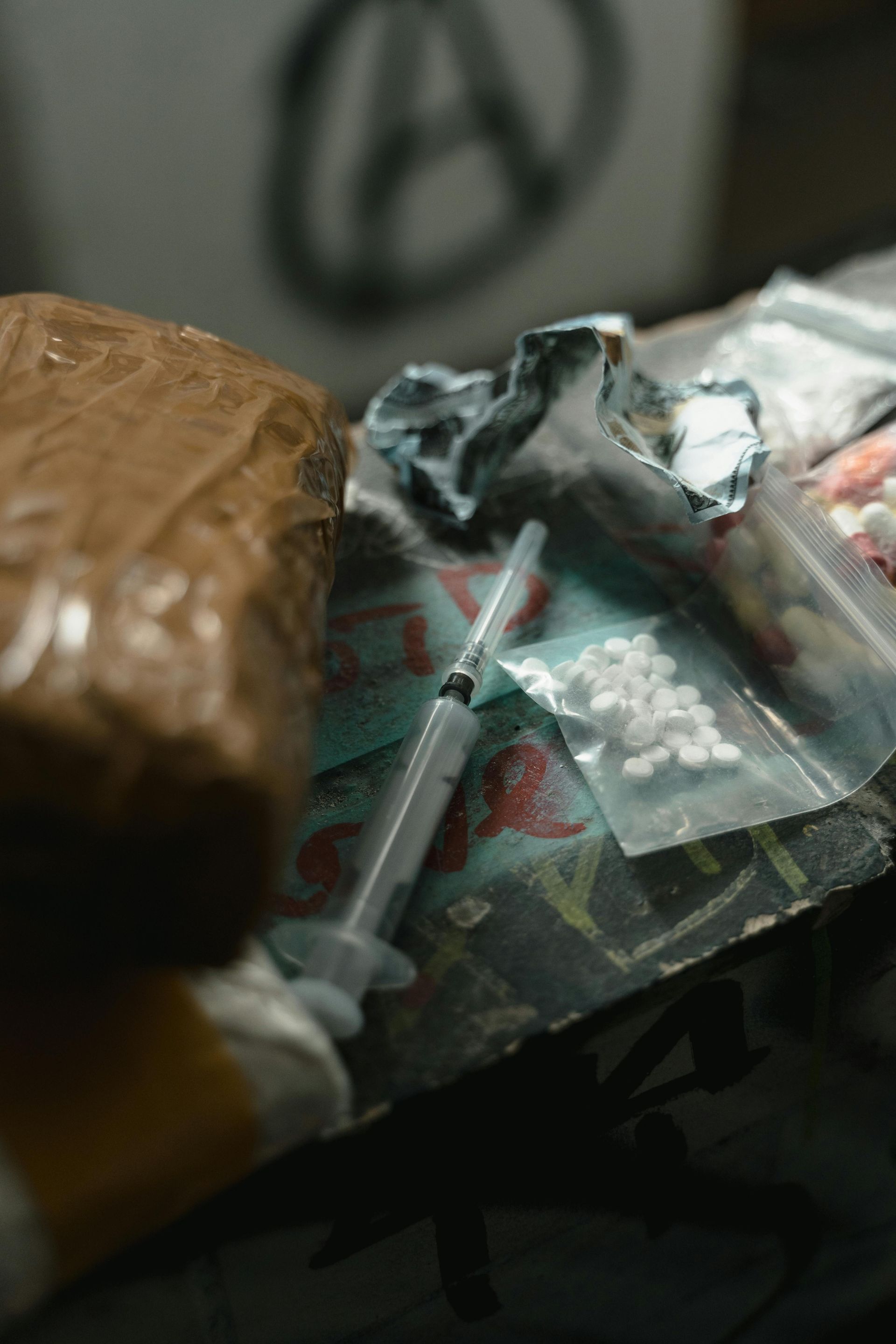
What Proper Drug Crime Defense Requires
Effective drug crime defense requires a detailed review of search warrants, traffic stop justifications, and seizure procedures. The Fourth Amendment protects against unreasonable searches, and evidence obtained in violation of constitutional rights can be suppressed. Amicus Law examines whether officers had probable cause to stop a vehicle, whether a search warrant was supported by sufficient evidence, and whether confidential informants provided reliable information. Procedural errors during evidence collection, chain of custody gaps, and improper handling of controlled substances can all weaken the prosecution's case.
You receive a defense strategy built around the specific facts of your case, including challenges to constructive possession theories when drugs were found in shared spaces or vehicles, arguments that you lacked knowledge of the substance, and evidence that law enforcement exceeded the scope of a lawful search. The firm also evaluates whether diversion programs, treatment alternatives, or charge reductions are appropriate based on your criminal history and the nature of the allegations.
Drug cases involving manufacturing or distribution allegations require analysis of evidence such as scales, packaging materials, large amounts of cash, or communications that prosecutors claim demonstrate intent to sell. The firm investigates whether this evidence actually supports the charge or whether alternative explanations exist. When factual disputes arise, the firm prepares for trial while pursuing favorable plea agreements if dismissal is not achievable.
Common Questions About Drug Crime Representation
Drug charges involve complex legal issues, and clients often need clarity about how the defense process works.
What is the difference between possession and distribution charges?
Possession charges allege that you had a controlled substance for personal use, while distribution charges allege intent to sell or deliver the substance to others. Prosecutors infer intent from factors like quantity, packaging, scales, cash, or communications. Distribution charges carry more severe penalties, and the firm challenges the evidence prosecutors use to prove intent beyond possession.
Can a search warrant be challenged?
Search warrants can be challenged if they were not supported by probable cause, if the affidavit contained false information, or if officers exceeded the scope of the warrant during the search. In Saint Paul and across Minnesota, the firm reviews warrant applications and execution procedures to identify constitutional violations that may result in evidence suppression.
What happens if drugs were found in a car with multiple people?
Prosecutors must prove you had possession of the controlled substance, either actual possession or constructive possession with knowledge and control. When drugs are found in shared spaces, the firm challenges the prosecution's ability to prove you knew the substance was present and had control over it. Ownership of the vehicle, proximity to the drugs, and other evidence are all evaluated.
Are diversion programs available for drug charges?
Some jurisdictions offer diversion or treatment programs that allow eligible individuals to avoid conviction by completing specific requirements. Eligibility depends on criminal history, the nature of the charge, and prosecutorial discretion. Amicus Law PC evaluates whether these options are available and advocates for alternatives to traditional prosecution when appropriate.
Should I speak to investigators before consulting an attorney?
No. Statements made during police interviews can be used against you even if you believe you are explaining the situation or providing context. Investigators may misrepresent the strength of their evidence or suggest cooperation will result in leniency. Contact the firm before answering any questions or providing information to law enforcement.
Amicus Law evaluates every aspect of your case to identify weaknesses in the prosecution's evidence and protect your rights. Reach out at (612) 852-5005 to discuss your drug-related charges and available defenses.